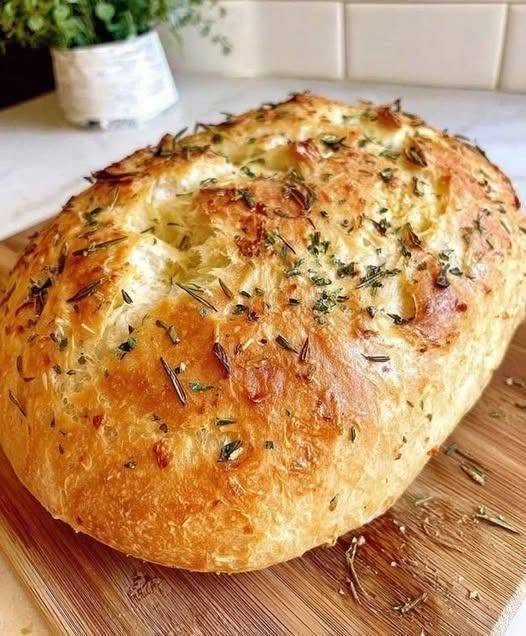
Welcome to the wonderful world of home baking where simple ingredients transform into absolute magic right inside your very own kitchen. Today we are exploring a gorgeous recipe for sourdough rustic no knead rosemary garlic bread that brings warmth and comfort straight to your dining table. This incredible loaf combines the lovely earthy taste of fresh rosemary with the deep savory punch of roasted garlic while using natural wild yeast instead of store bought packets. You do not need any fancy mixing machines or intense arm muscles because this dough comes together completely by hand using just a simple wooden spoon or spatula. The long fermentation process allows wild yeast to work its slow magic creating a stunning chewy crumb texture and a wonderfully blistered crust that crackles when you slice it. Whether you are an absolute beginner who has never touched flour before or an experienced baker looking for a reliable weekend project this guide is specially designed for you. We will walk through every single phase together from bubbly starter to the final golden masterpiece so you can feel total confidence and joy while baking. Get ready to fill your entire home with the most heavenly aroma imaginable as your oven works its magic on this extraordinary rustic creation. By the time you pull your hot Dutch oven out you will realize that baking artisan bread at home is not only achievable but also deeply therapeutic and fun.
People all around the world fall absolutely in love with this specific style of bread because it hits every single sensory note you could possibly desire in a savory snack. The combination of fragrant rosemary needles and soft mellow garlic creates an aromatic profile that feels both rustic and deeply sophisticated yet incredibly welcoming to everyone. Unlike regular commercial yeast breads that taste flat and stale after a single day this sourdough creation develops complex tangy flavors that deepen beautifully over time. People adore the fact that you do not need to knead the dough for twenty minutes or worry about developing gluten through exhausting physical labor. Instead you just mix everything loosely in a bowl and let time do all the heavy lifting while you go about your normal daily activities. The crust develops a magnificent deep golden brown color with blistered patches that look like they came straight out of a professional European artisan bakery downtown. Inside the crumb is soft and airy with irregular holes that capture melting butter or high quality olive oil with absolute perfection on every single bite. It is the kind of food that brings family members running into the kitchen from other rooms just to ask when the loaf will finally be ready. Sharing a warm slice of this bread with people you care about creates instant connection and happiness that store bought plastic wrapped loaves can never match.
There are countless wonderful moments throughout the week when baking this sourdough rosemary garlic bread becomes the most rewarding and comforting activity you can possibly choose. Imagine coming home on a chilly autumn evening after a long stressful day at work and smelling the gentle scent of yeast and herbs welcoming you. Baking this bread provides a gorgeous emotional outlet allowing you to channel your stress into folding dough and watching bubbles form inside the glass jar. From a taste perspective nothing compares to eating a warm piece of crusty bread slathered in salted butter while the garlic flavor melts gently on your tongue. If you care about wholesome eating habits you will love that this recipe uses very clean ingredients without any artificial preservatives or mysterious additives found in commercial aisle products. Furthermore the natural fermentation process breaks down complex starches and gluten proteins making this rustic bread much easier for many people to digest compared to standard white bread. It fits beautifully into a wholesome lifestyle because you control every single gram of flour water salt and fat that goes into your daily food preparation. Making your own bread also gives you a wonderful sense of self reliance and accomplishment that boosts your mood and brightens your entire week. There is truly no bad time to start a batch because the hands on time is minimal and the delicious payoff lasts for days on end.
Embarking on this baking journey requires just a little bit of patience and excitement to see how flour and water transform through natural biological processes into pure culinary art. You will feel a deep sense of pride when you lift the heavy lid of your preheated pot to reveal a magnificent loaf that looks like a masterpiece. The golden crust will shine under your kitchen lights and the sound of a crisp knife cutting through the top will validate every single hour you waited. Do not worry if your first attempt looks slightly different from the photographs because every single loaf has its own unique personality and charming rustic character. Cooking is an intuitive journey of learning what your dough needs and adjusting to the temperature and humidity of your own unique kitchen environment. Embrace every little step of the process from bubbly starter to the final clean crumb and remember to enjoy the wonderful sensory experience along the way. Your friends and family will be thoroughly impressed when you serve them homemade artisan bread that rivals the finest local bakeries in town. So put on your favorite apron wash your hands thoroughly and get ready to dive into the most satisfying baking adventure of your entire life. Let this recipe become a cherished staple in your home cookbook and share the wonderful gift of homemade sourdough bread with everyone who crosses your threshold.
Ingredients You Will Need
Active Sourdough Starter: One hundred grams fed and bubbly Warm Water: Three hundred fifty milliliters filtered or spring Bread Flour: Five hundred grams unbleached white Salt: Ten grams fine sea salt or kosher salt Fresh Rosemary: Two tablespoons finely chopped fresh leaves Garlic: Four cloves minced or roasted garlic paste Olive Oil: One tablespoon extra virgin for coating
Step by Step Method
Feed your active sourdough starter four to twelve hours before beginning so it is happy bubbly and floating nicely in water. Pour three hundred fifty milliliters of warm water into a large mixing bowl and add one hundred grams of your bubbly active sourdough starter. Stir the water and starter together gently using a wooden spoon or silicone spatula until the mixture looks milky and slightly frothy. Measure out five hundred grams of unbleached bread flour and add it directly into the bowl along with ten grams of fine sea salt. Add your finely chopped fresh rosemary leaves and the minced garlic cloves directly into the dry flour mixture before incorporating the liquids. Mix all the ingredients together with your hands or a sturdy spoon until no dry patches of flour remain and a shaggy dough forms. Cover the mixing bowl loosely with a clean damp kitchen towel or plastic wrap to prevent the dough from drying out while resting. Let the dough rest at room temperature for one hour so the flour can absorb all the moisture completely through a process called autolyse. Perform your first set of stretch and folds by grabbing the edge of the dough pulling it up gently and folding it over the center. Rotate the bowl slightly and repeat this stretching and folding action four to six times until you complete one full circle around the bowl. Cover the bowl again and let the dough rest for thirty minutes before performing your second set of stretch and folds just like before. Complete a total of four sets of stretch and folds spaced thirty minutes apart to build wonderful gluten structure without any heavy kneading. Add one tablespoon of extra virgin olive oil during the final fold to help enrich the dough and distribute the rosemary flavor evenly. Cover the bowl tightly with plastic wrap or a fitted lid and let the dough ferment at room temperature for six to twelve hours. Watch for signs of bulk fermentation completion such as a doubled volume domed top surface and lovely bubbles visible through the sides of the bowl. Turn the fermented dough out onto a lightly floured clean kitchen counter being very careful not to deflate all the wonderful air bubbles inside. Shape the dough into a tight round ball by pulling the edges toward the center and rolling it gently against the un-floured counter surface. Let the shaped dough rest uncovered on the counter for twenty minutes to relax the gluten structure before the final shaping phase. Flip the dough upside down on your counter fold the bottom up the sides in and roll it tightly into a smooth round boule or batard. Dust a banneton basket generously with rice flour or bread flour and place your shaped dough upside down inside the basket for proofing. Cover the banneton with a plastic bag or shower cap and place it into the refrigerator for a cold overnight fermentation of twelve to twenty four hours. Preheat your heavy cast iron Dutch oven with its lid securely on inside your oven at four hundred fifty degrees Fahrenheit for one full hour. Remove the cold dough from the refrigerator carefully and turn it out gently onto a piece of parchment paper designed for baking safely. Score the top of the chilled loaf deeply at a thirty degree angle using a sharp razor blade or lame to allow proper expansion during baking. Lower the parchment paper holding your scored dough carefully into the extremely hot Dutch oven using the paper corners as convenient handles. Place the heavy lid back onto the Dutch oven securely and bake the loaf covered at four hundred fifty degrees Fahrenheit for twenty minutes. Remove the lid carefully after twenty minutes to release the trapped steam and allow the magnificent golden crust to develop fully. Bake the uncovered loaf for an additional twenty to twenty five minutes until the crust turns a deep rich mahogany brown color. Lift the baked loaf out of the Dutch oven using your parchment paper and place it onto a wire cooling rack immediately. Let the freshly baked bread cool completely for at least two hours before attempting to slice into it to ensure the crumb sets properly.
Why This Recipe Is Special
This remarkable sourdough bread stands out from ordinary recipes because it harnesses the incredible power of wild fermentation to create unmatched depth of flavor. The natural acids produced by wild yeast give the crumb a subtle tanginess that balances the savory richness of garlic and the herbal notes of rosemary. Health wise, long fermentation breaks down phytic acid present in wheat flour which makes minerals much easier for your digestive system to absorb efficiently. Furthermore, you avoid all chemical preservatives dough conditioners and artificial flavor enhancers found in commercial grocery store loaves ensuring your body gets pure wholesome nutrition. The sensory experience is also truly special because the crust offers a loud satisfying crunch while the interior remains pillowy soft and wonderfully moist for days. Making this bread connects you to centuries of culinary tradition transforming simple pantry staples into a gorgeous centerpiece that brings people together with love and joy.
Extra Tips for Better Taste
Try roasting whole heads of garlic in olive oil until caramelized before mixing the soft cloves into your dough for a sweeter and deeper flavor profile. You can also experiment with adding freshly grated parmesan cheese alongside the rosemary to create an incredible cheesy variation that kids and adults will both adore. Make sure your sourdough starter is at peak activity before mixing because a sluggish starter will result in a dense loaf that fails to rise properly in the oven. If your kitchen is particularly cold during winter months place your dough inside the oven with the internal light turned on to create a warm cozy proofing environment. Always use high quality unbleached bread flour with a high protein content because strong gluten development is the secret to getting those gorgeous open crumb structures. Do not rush the cooling process because cutting into warm bread causes the interior starches to compress and gummy textures can ruin your hard work. Store your leftover loaf in a paper bag or a linen bread bag on the counter rather than plastic to keep the crust wonderfully crisp and fresh.
Final Thoughts
Baking your very own sourdough rustic no knead rosemary garlic bread is an empowering journey that transforms flour water salt and herbs into pure edible joy. Every single loaf you create will teach you something new about the beautiful science and art of natural fermentation while filling your home with wonderful aromas. Take your time enjoy the slow rhythms of mixing folding and waiting and never be afraid to make mistakes along the path to mastering artisan baking. Share your delicious creation with neighbors friends and family members and watch how a simple slice of homemade bread can brighten someone entire day instantly. We hope this comprehensive guide inspires you to preheat your oven tie on your apron and start your sourdough adventure with confidence and excitement today.
Nutrition Details
Serving Size: One slice around sixty grams Calories: One hundred sixty five Total Fat: Two grams Saturated Fat: Zero grams Cholesterol: Zero milligrams Sodium: Two hundred ten milligrams Total Carbohydrates: Thirty one grams Dietary Fiber: Two grams Total Sugars: Zero grams Protein: Five grams Calcium: Fifteen milligrams Iron: Two milligrams Potassium: Sixty milligrams
Disclaimer
This article is provided for general informational and educational purposes only and should not be construed as professional nutritional or medical advice regarding your diet. Every single human body is completely unique with different metabolic rates dietary needs and health conditions that influence how foods affect your overall wellness. Results achieved from following this recipe may vary depending on your specific kitchen environment ingredients skill level and personal dietary requirements or restrictions. Always consult with a qualified healthcare provider or registered dietitian before making drastic changes to your daily nutrition plan or managing health conditions.