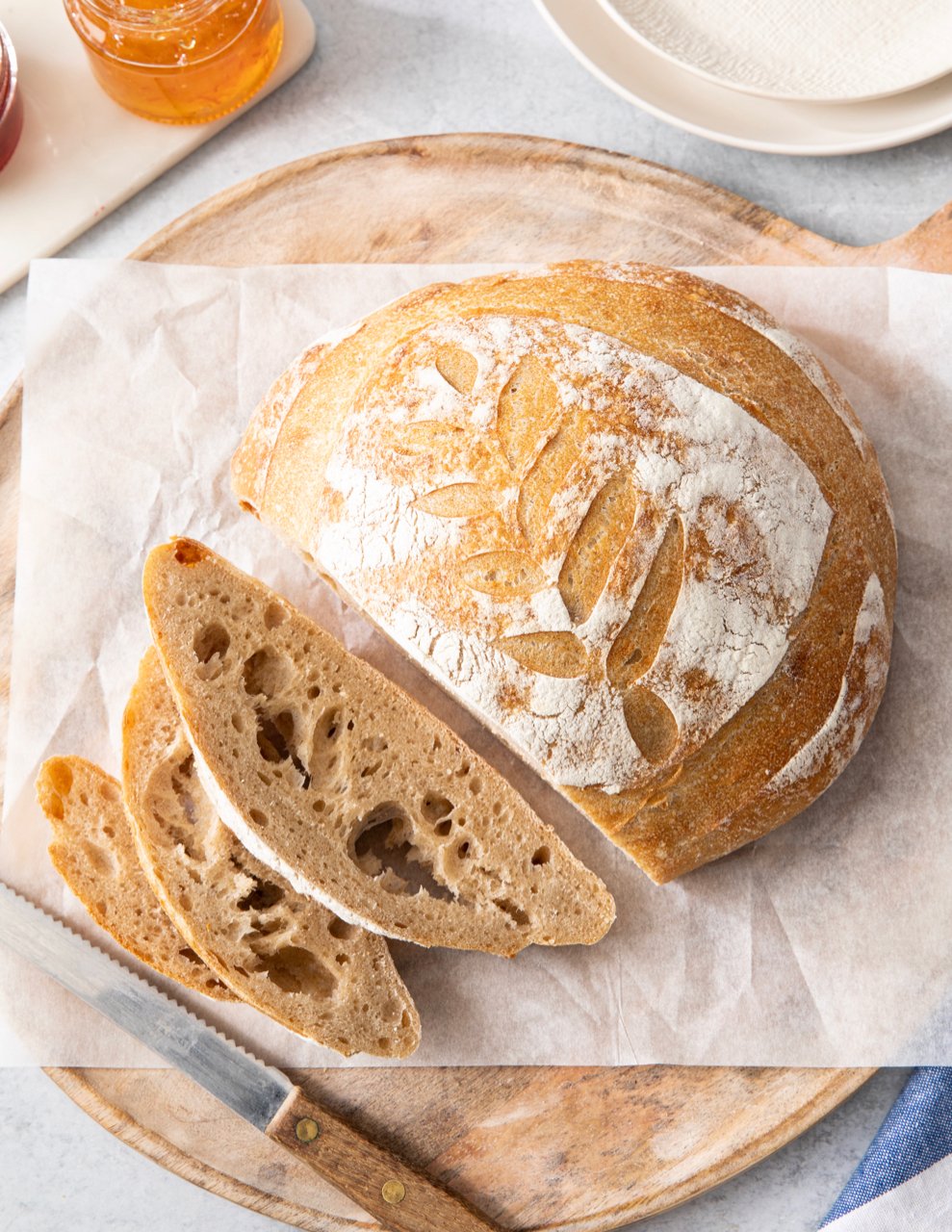
Welcome to the ultimate guide on how to bake a magnificent homemade sourdough boule bread right in your own kitchen using simple techniques that anyone can master. This comprehensive recipe and guide will walk you through every single stage of creating a traditional round artisan loaf from scratch without needing any complicated commercial yeasts or fancy professional bakery equipment. You will learn how to harness the natural power of wild yeast through a healthy sourdough starter to create bread that has a wonderfully crispy golden brown crust and a soft airy interior. Making artisan bread at home might feel intimidating when you first look at complex baking books, but this guide breaks everything down into friendly everyday language that puts you completely at ease. We are going to focus on the pure joy of mixing flour water and salt together and watching nature transform those basic ingredients into a masterpiece. By the time you finish reading this entire guide you will feel confident enough to start your own baking journey and share fresh warm bread with your family.
People all over the world completely fall in love with homemade sourdough boule bread because it offers an incredible sensory experience that store bought sandwich bread simply cannot match. When you pull a fresh round loaf out of your hot oven the rustic appearance alone will make your heart sing with pride and excitement. The aroma that fills your entire house while the bread bakes is warm comforting and smells like a cozy traditional bakery on a crisp morning. Furthermore the unique tangy flavor profile combined with the satisfying crunch of the crust creates a taste sensation that keeps you coming back for just one more slice. Unlike regular commercial bread that often contains preservatives and artificial additives this traditional recipe relies entirely on natural fermentation which develops complex flavors over hours of patient resting. It is truly a labor of love that rewards you with authentic texture rich rustic holes inside and a deep golden exterior that looks like it came from a high end artisan shop.
You should definitely choose to make this wonderful sourdough boule bread whenever you want to slow down and practice a calming mindful kitchen activity during your busy week. Baking bread is an amazing emotional outlet that lets you channel your creativity and stress into kneading and shaping a living dough with your own hands. From a taste perspective nothing compares to spreading creamy butter or rich olive oil over a warm piece of freshly baked crusty bread straight from your own oven. If you are watching your overall wellness you will also appreciate that sourdough is often much easier on the digestive system compared to heavy processed white breads. It fits wonderfully into a wholesome lifestyle because you control every single ingredient that goes into the mixing bowl ensuring absolute purity and maximum nutritional value for your loved ones. Whether you are baking a special weekend breakfast for your family or looking for a relaxing hobby to occupy your Sunday afternoon this recipe is the perfect choice.
Bringing this beautiful baking project to life is an exceptionally rewarding experience that connects you to centuries of culinary history practiced by bakers around the globe. Every single loaf of sourdough boule bread you bake will have its own unique personality and character depending on the temperature of your kitchen and the mood of your starter. You do not need to be a professional chef to achieve stunning results because patience and observation are your most important tools throughout this entire baking adventure. As you watch the dough rise and develop beautiful bubbles you will feel a deep sense of accomplishment that turns cooking into a true passion. Gather your favorite mixing bowl grab a sturdy wooden spoon and get ready to embark on a delicious journey that will forever change the way you think about homemade bread. Let us dive right into the simple ingredients you will need to collect before starting this wonderful baking adventure in your cozy kitchen.
Ingredients You Will Need
To bake this delicious sourdough boule bread successfully you will need to gather a few simple wholesome ingredients that you can easily find at any local grocery store. Here is the complete list of exact quantities and units to ensure your baking process goes smoothly from start to finish without any confusion or missing items. Make sure your ingredients are at room temperature before you begin mixing everything together for the best possible fermentation results.
Active Sourdough Starter: 100 grams of bubbly active bubbly starter that has been fed recently and is ready to rise. Unbleached All Purpose Flour: 450 grams for the main dough plus an extra 50 grams for dusting your work surface and proofing basket. Whole Wheat Flour: 50 grams to add a subtle nutty depth of flavor and better structure to the crumb. Lukewarm Water: 350 milliliters measured carefully to ensure proper hydration of your flour mixture. Fine Sea Salt: 10 grams which is about 2 teaspoons to enhance all the wonderful natural flavors of the grains.
Step by Step Method
Begin your wonderful baking journey by taking a large glass or ceramic mixing bowl and combining your active bubbly sourdough starter with the lukewarm water using a flexible silicone spatula. Stir the mixture gently until the starter is completely dissolved in the water and the liquid looks slightly milky and smooth. Next add your unbleached all purpose flour and whole wheat flour directly into the liquid mixture stirring thoroughly until no dry flour patches remain visible in the bowl. Cover the bowl loosely with a clean damp kitchen towel or a reusable plastic wrap and let the dough rest undisturbed at room temperature for about 45 minutes. This resting phase is known as autolyse which allows the flour to absorb all the water fully and begins the natural gluten development process naturally.
After your resting period is complete sprinkle your fine sea salt evenly across the top of the dough and pour one tablespoon of water over the salt to help it dissolve easily. Use your clean hand to pinch and fold the dough repeatedly working the salt deeply into every part of the mass until it is fully incorporated. Now you will begin the stretch and fold process which builds structural strength in your dough without needing any traditional heavy kneading on the counter. Grab one side of the dough stretch it gently upward as far as it will comfortably go without tearing and fold it over the center toward the opposite side. Rotate your mixing bowl a quarter turn and repeat this exact stretching and folding action four times to complete one full set of folds. Cover your bowl again and let the dough rest for 30 minutes before repeating this exact stretching and folding sequence four more times over the next two hours.
Once you finish all your folds cover the bowl securely and leave the dough undisturbed in a warm spot in your kitchen for the bulk fermentation phase to take place. This bulk rise can take anywhere from four to six hours depending entirely on how warm your room is and how active your sourdough starter happens to be. You will know the bulk fermentation is successfully finished when the dough has increased significantly in volume shows nice gas bubbles on the surface and looks slightly domed and jiggly. Gently turn your fermented dough out onto a lightly floured work surface using a flexible scraper to avoid deflating the delicate air pockets inside the mass. Round the dough into a loose ball by pulling it toward you against the counter and let it rest uncovered on the surface for 15 minutes to relax.
After the short bench rest flip your dough ball over so the sticky side faces upward and perform your final shaping into a neat tight round boule shape. Cup your hands around the edges of the dough and drag it gently across the counter in a circular motion to build surface tension across the smooth outer skin. Dust a round proofing basket heavily with rice flour or all purpose flour to prevent sticking and place your shaped boule inside upside down so the seam faces upward. Cover the basket with a plastic bag or a damp cloth and place it into your refrigerator overnight for a slow cold fermentation of 12 to 16 hours. This cold overnight rest is the secret weapon that develops those complex tangy flavors and gives your crust that gorgeous blistered finish when it bakes.
The next morning place a heavy Dutch oven with its matching heavy lid securely on the middle rack of your oven and preheat everything to 450 degrees Fahrenheit for one hour. While your Dutch oven is getting extremely hot take your proofing basket out of the refrigerator and invert the chilled boule carefully onto a sheet of parchment paper. Use a sharp razor blade or a specialized bread lame to make a bold diagonal slash across the top of the dough to allow steam to escape safely. Carefully remove the smoking hot Dutch oven from your home oven using thick protective mitts and lift the lid off with caution. Pick up the parchment paper by its corners and lower the scored dough boule gently down into the center of the blazing hot Dutch oven pot.
Place the heavy lid back on top of the Dutch oven immediately to trap all the escaping steam inside which creates that magical shiny blistered crust during the baking process. Bake the covered bread inside the hot oven for 20 minutes to allow maximum oven spring and fantastic vertical rise without drying out the outer crust. After 20 minutes carefully remove the heavy lid from the Dutch oven and continue baking the loaf uncovered for another 20 to 25 minutes. Watch the crust closely during these final minutes until it turns a deep gorgeous golden brown color that looks rustic and completely irresistible. Once baked to perfection use a large spatula or tongs to lift the hot boule out of the pot and place it onto a wire cooling rack immediately.
Why This Recipe Is Special
This wonderful sourdough boule bread recipe stands out from ordinary baking guides because it emphasizes traditional methods that require patience and simple ingredients rather than chemical additives. One of the greatest health points of this recipe is that the long fermentation process breaks down complex starches and phytic acid naturally making the bread much easier to digest. Many people who experience mild sensitivity to commercial grocery store wheat find that they can enjoy traditional slow fermented sourdough without any uncomfortable bloating or heavy feelings. Furthermore the slow breakdown of sugars by wild yeasts and beneficial bacteria results in a lower glycemic response compared to standard fast rising commercial white bread options. Taste wise the crumb offers a wonderfully chewy texture with a subtle tang that balances out rich savory spreads like salted butter or garlic infused olive oil. It is truly a wholesome masterpiece that brings ancient baking traditions directly into your modern kitchen with foolproof steps that guarantee success every single time.
Extra Tips for Better Taste
If you want to take your homemade sourdough boule bread to the next level of culinary excellence here are some creative improvement tips you can easily try during your next baking session. You can experiment by replacing 50 grams of the all purpose flour with freshly milled rye flour to introduce a deeper earthy flavor profile to your final loaf. Another fantastic idea is to fold a handful of roasted garlic cloves or toasted walnuts into your dough during the final stretching stage for extra gourmet flair. Always ensure your baking environment is relatively warm during the bulk rise because a cozy temperature helps the wild yeast stay active and produces a much fluffier interior crumb. When scoring your dough make sure your razor blade is held at a slight angle rather than straight up and down to encourage an attractive ear formation. Finally always let your finished bread cool completely on a wire rack for at least two hours before slicing into it to allow the internal moisture to set.
Final Thoughts
Baking your very own artisan sourdough boule bread is a deeply fulfilling journey that transforms basic pantry staples into an edible work of art for you and your family. We hope this comprehensive guide has inspired you to dust off your mixing bowls and embrace the wonderful slow paced world of wild yeast baking with confidence and joy. Remember that every single loaf you bake is a learning experience that brings you closer to becoming a skilled home baker who can create magic from scratch. Enjoy every single moment in the kitchen share your warm slices with the people you love and cherish the comforting feeling of a truly homemade meal. Happy baking and may your kitchen always be filled with the wonderful aroma of freshly baked bread and happiness.
Nutrition Details
Understanding the nutritional content of your homemade food helps you make informed choices that fit your personal health goals and daily dietary requirements effortlessly. The table below provides a detailed breakdown of the nutritional values per serving for this delicious sourdough boule bread based on standard ingredient calculations. Please note that these numbers are close approximations and can vary slightly depending on the exact brands of flour you use and your final slice sizes.
Nutritional Fact | Amount Per Serving | Percentage of Daily Value Calories | 185 kcal | 9 percent Total Carbohydrates | 36 g | 13 percent Dietary Fiber | 2 g | 7 percent Sugars | 0 g | 0 percent Total Fat | 1 g | 1 percent Protein | 6 g | 12 percent Sodium | 290 mg | 13 percent Iron | 2 mg | 11 percent
Disclaimer
The nutritional information and health benefits discussed in this article are provided solely for general educational and informational purposes and should not be considered professional medical or dietary advice. Every single human body is completely unique and individual responses to foods including fermented sourdough bread can vary significantly from person to person. If you have specific medical conditions food allergies or dietary restrictions you should always consult with a qualified healthcare professional before making major changes to your diet. Enjoy your delicious homemade bread mindfully as part of a balanced lifestyle and listen to your own body to find what works best for your personal wellness journey.