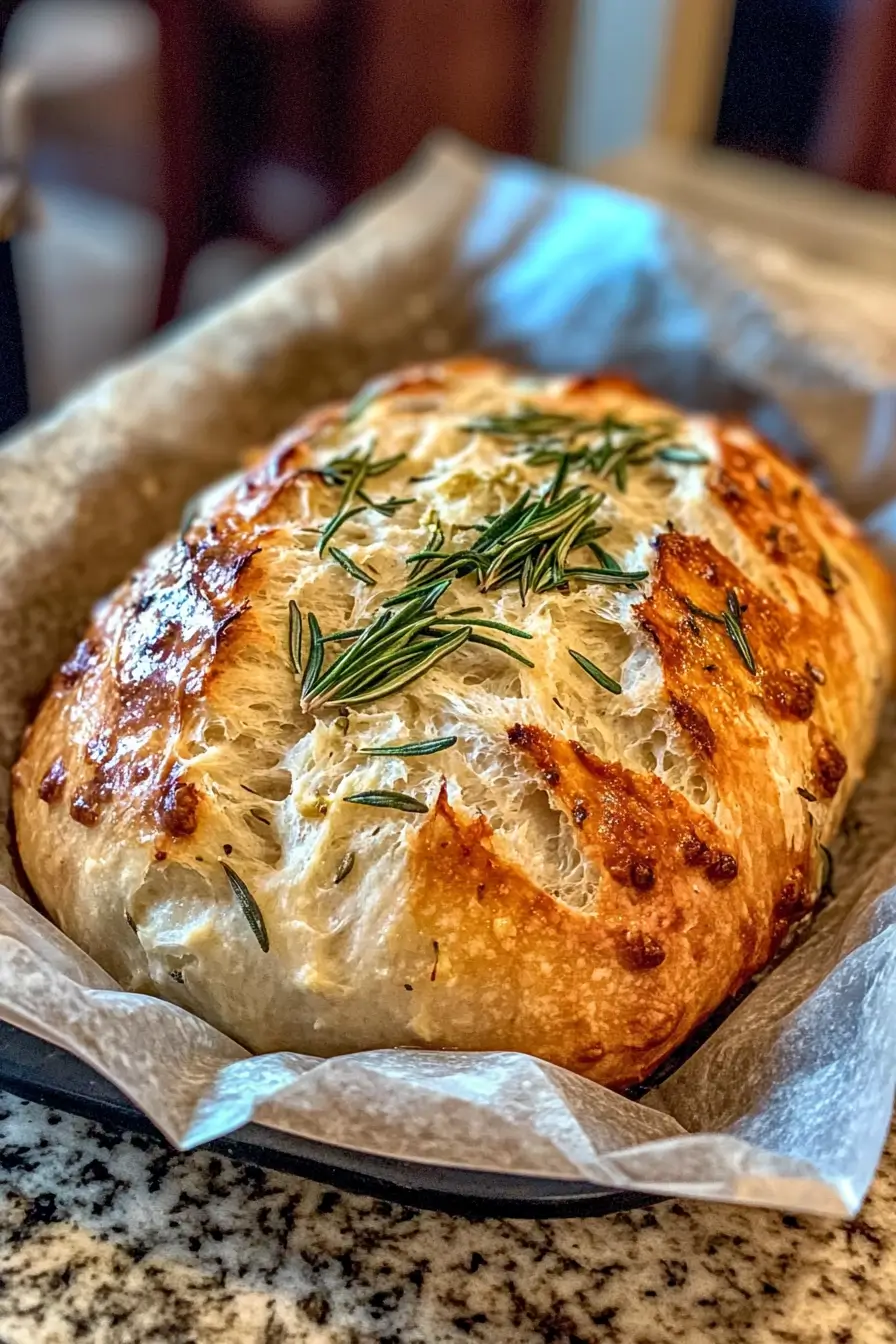
There is something deeply comforting about the smell of fresh bread baking inside a warm home kitchen. Sourdough rustic no knead rosemary garlic bread is one of those special recipes that fills your house with an amazing aroma before you even open the oven door. This recipe brings together simple ingredients to create a golden loaf with a dark crust and a soft interior filled with lovely savory flavor. You do not need any advanced baking equipment or crazy skills to pull this off at home. The entire magic relies on time and simple fermentation rather than heavy physical work, making it the perfect loaf for beginner bakers who feel intimidated by traditional recipes. By combining sweet fragrant herbs with rich aromatic garlic inside a naturally fermented sourdough base, you end up with an artisanal quality bread that rivals the fancy loaves sold at expensive local bakeries.
People all over the world fall in love with this loaf because it removes all the stress usually associated with making fresh bread from scratch. Traditional baking requires long minutes of tiresome hand movement to build structure, but this effortless approach relies on natural hydration and rest to build strength automatically. The crust turns out remarkably crunchy, cracking loudly under your knife, while the inside remains airy, moist, and tender. Earthy fresh herbs paired with rich warm garlic create a bold flavor profile that pairs wonderfully with sweet butter or rich olive oil. It is also a very forgiving method, meaning you can easily fit the preparation into your normal daily schedule without feeling trapped in the kitchen for hours. Everyone who tries a warm slice straight out of the oven falls instantly in love with its rich flavor and delightful textural contrast.
This delicious loaf is wonderful to make whenever you want to bring extra warmth, happiness, and comfort into your weekly home routine. It is an incredible choice for quiet weekend mornings, cozy holiday dinners with family, or casual evening gatherings with close friends. Serving a homemade loaf of sourdough rustic no knead rosemary garlic bread makes any meal feel like a festive occasion worth celebrating together. Beyond the incredible taste, there is also a deeply rewarding emotional feeling that comes from taking basic ingredients and slowly transforming them into something so beautiful. Baking this loaf allows you to slow down, practice mindfulness, and enjoy a wholesome creative activity away from screens and daily stress. It brings real joy to both the person making it and everyone lucky enough to enjoy a fresh slice.
Ingredients You Will Need
-
400 grams of unbleached bread flour
-
100 grams of active bubbly sourdough starter
-
320 grams of lukewarm pure water
-
8 grams of fine sea salt
-
15 grams of extra virgin olive oil
-
12 grams of fresh rosemary leaves finely chopped
-
4 cloves of fresh garlic minced finely
-
2 grams of whole black pepper coarsely crushed
Step by Step Method
-
In a large glass mixing bowl, combine the active bubbly sourdough starter with the lukewarm pure water and stir gently using a wooden spoon until fully blended.
-
Add the unbleached bread flour and fine sea salt into the bowl, then mix thoroughly with your hands or a spatula until no dry flour spots remain visible.
-
Cover the bowl loosely with a clean damp kitchen towel and let the shaggy mixture rest undisturbed for thirty minutes to allow the flour to absorb the water naturally.
-
Uncover the bowl and add the extra virgin olive oil, finely chopped fresh rosemary leaves, minced fresh garlic, and crushed black pepper evenly across the surface of the dough.
-
Perform your first set of stretches and folds by reaching down under one side of the dough, gently lifting it upward, and folding it over the top toward the opposite side.
-
Rotate the mixing bowl ninety degrees and repeat the stretch and fold action on all four sides until the herbs and garlic are evenly distributed throughout the soft dough.
-
Cover the bowl again and let it rest at room temperature for thirty minutes before performing a second set of stretches and folds in the exact same manner.
-
Repeat this simple rest and fold cycle two more times every thirty minutes, completing four total sets over the span of two full hours.
-
After the final fold set, cover the bowl tightly with plastic wrap and allow the dough to bulk ferment at warm room temperature for roughly four to six hours until it grows in size by fifty percent and shows visible air bubbles.
-
Lightly dust your clean kitchen counter with flour, gently tip the fermented dough out of the bowl, and shape it into a smooth round ball by tucking the edges neatly underneath.
-
Transfer the shaped round loaf into a proofing basket lined with a clean towel that has been generously dusted with rice flour to prevent sticking.
-
Cover the basket loosely and place it inside your refrigerator to chill overnight for twelve to sixteen hours, which develops that signature tangy flavor and improves loaf structure.
-
The following morning, place a heavy Dutch oven pot with its lid on inside your cold oven and preheat the oven to 230 degrees Celsius for forty five minutes.
-
Carefully remove the chilled dough from the refrigerator, invert it onto a piece of parchment paper, and score the top surface deeply with a razor blade or sharp knife to let steam escape while baking.
-
Carefully remove the burning hot Dutch oven pot from your main oven, gently lower the parchment paper with the scored dough into the pot, and place the heavy lid tightly back on top.
-
Bake inside the hot oven with the lid on for twenty five minutes to trap the steam, which allows the loaf to expand fully and build a great crusty structure.
-
Remove the lid from the Dutch oven pot carefully and continue baking uncovered for another twenty minutes until the crust turns a rich deep golden brown shade.
-
Lift the baked bread out of the Dutch oven using the edges of the parchment paper and place it onto a wire cooling rack immediately.
-
Allow the hot loaf to cool completely at room temperature for at least two hours before slicing, because cutting into hot bread ruins the interior texture and makes it gummy.
Why This Recipe Is Special
This sourdough rustic no knead rosemary garlic bread holds a unique place in rustic baking because it bridges the gap between artisan quality and simple effortlessness. Traditional bread recipes require intense physical labor and constant monitoring, but this approach uses time as the primary ingredient. The long cool fermentation process degrades gluten proteins into simpler chains, which makes the final structure remarkably light and far easier to digest for people sensitive to commercial yeast. In addition, the natural acids produced during sourdough fermentation help preserve the fresh bread naturally without needing synthetic chemical additives or artificial preservatives found in commercial options.
The taste profile achieved by combining fresh garlic with aromatic rosemary elevates a simple loaf into something truly memorable for dinner guests or family members. As the garlic bakes inside the moist environment of the dough, it mellows into a sweet savory flavor that complements the earthy wooden notes of fresh rosemary leaves. The crunchy exterior crust provides an impressive satisfying crunch when bitten into, while the airy open crumb remains incredibly soft and springy. Eating a slice provides a rewarding culinary experience that feels grounded in ancient baking traditions while easily fitting into modern daily life.
Extra Tips for Better Taste
-
Use roasted garlic cloves instead of raw minced garlic if you want an even sweeter, softer flavor throughout your entire loaf.
-
Dust your proofing basket with a blend of rice flour and fine cornmeal to create an extra crispy texture on the bottom crust.
-
Incorporate a pinch of flaky sea salt over the top of the scored dough right before putting it into the oven for a nice salty bite.
-
Pour a small amount of extra virgin olive oil into the bottom of your Dutch oven under the paper for a fried bottom crust effect.
-
Store your leftover bread wrapped tightly in a clean linen cloth at room temperature rather than in plastic, which preserves the crispy outer crust longer.
-
Toast leftover slices lightly under the broiler and brush them with warm herb butter to create an amazing quick garlic toast.
Final Thoughts
Baking your own sourdough rustic no knead rosemary garlic bread at home is a simple yet deeply satisfying activity that fills your kitchen with joy and wonderful scents. You do not need years of specialized experience to master this recipe, as long as you remain patient and allow the natural process to take its time. Sharing a fresh loaf with loved ones creates moments of genuine connection around the dinner table that standard store bought options simply cannot match. Give this recipe a try during your next open weekend, take pride in the beautiful crust you create, and enjoy every single flavorful bite.
Nutrition Details
| Recipe Overview | Details |
| Total Recipe Yield | 1 Large Round Loafer |
| Serving Size | 1 Slice (Approx 70g) |
| Total Servings | 10 Servings |
| Prep Time | 20 Minutes |
| Rest and Fermentation Time | 18 Hours |
| Bake Time | 45 Minutes |
| Per Serving Breakdown | Amount |
| Calories | 175 kcal |
| Total Fat | 2.5 grams |
| Saturated Fat | 0.4 grams |
| Sodium | 310 milligrams |
| Total Carbohydrates | 32 grams |
| Dietary Fiber | 2 grams |
| Sugar | 0.5 grams |
| Protein | 5 grams |
Disclaimer
The nutritional information provided in this article is an estimate intended for general educational purposes only and may vary based on exact ingredients used. Everyone has unique dietary requirements, health conditions, and digestive capabilities, so individual responses to sourdough foods will differ. If you have specific medical conditions or severe gluten intolerances, please consult with a qualified health professional before altering your diet.